Media Release
December 2025
Imagining a crisis café
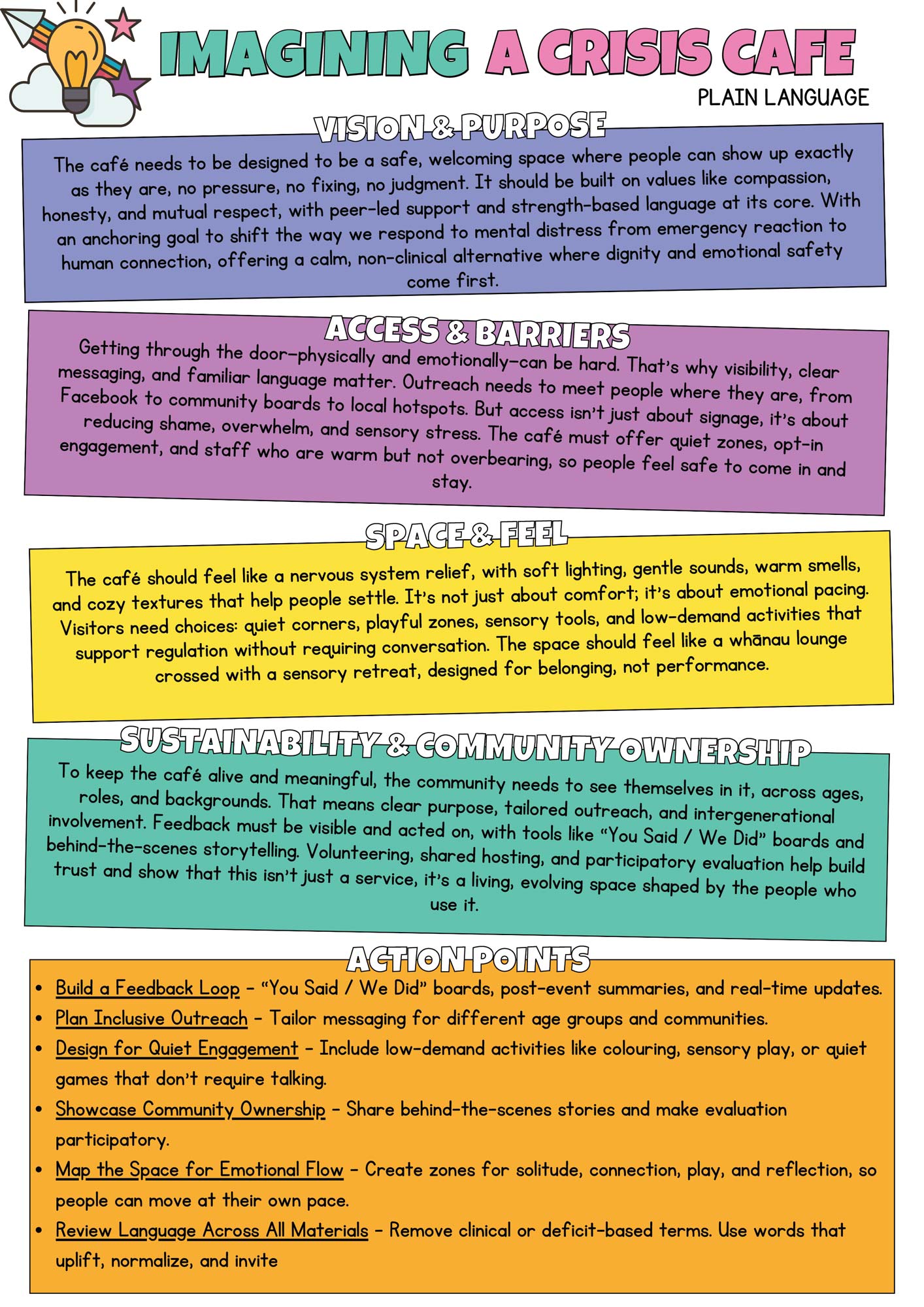
This conversation café invited community members to come and imagine, dream and describe what a crisis café would look like to them, for them and their whanau and community. We focused on the 4 areas that are included in the outcome sheet – Vision & purpose; where we asked participants to really think about what the purpose for this kind of space would need to be, the goals, values and kaupapa should look like, feel like and how that would be upheld. Access & Barriers; here we asked participants to consider both the physical access and barriers and the emotional/mental access and barriers. How the barriers can be minimised or completely mitigated, the access can be increased and encouraged and how we can advertise and portray the space. Space & feel; we encouraged participants here to consider a time they felt in distress or crisis and what external things helped them, what a crisis recovery space should look like, sound like, feel like and how that could be executed in the space that we have. Our final section focused on the sustainability and ownership of the space; as a peer run service we pride ourselves on being member-driven, ensuring that our consumer engagement helps to drive all that we do, this focus area really leant into this and encouraged participants to show us how we can ensure that the space is community owned and how we can ensure its sustainability.
Vision & Purpose
The café needs to be designed to be a safe, welcoming space where people can show up exactly as they are, no pressure, no fixing, no judgment. It should be built on values like compassion, honesty, and mutual respect, with peer-led support and strength-based language at its core. With an anchoring goal to shift the way we respond to mental distress from emergency reaction to human connection, offering a calm, non-clinical alternative where dignity and emotional safety come first.
Access & Barriers
Getting through the door—physically and emotionally—can be hard. That’s why visibility, clear messaging, and familiar language matter. Outreach needs to meet people where they are, from Facebook to community boards to local hotspots. But access isn’t just about signage, it’s about reducing shame, overwhelm, and sensory stress. The café must offer quiet zones, opt-in engagement, and staff who are warm but not overbearing, so people feel safe to come in and stay.
Space & Feel
The café should feel like a nervous system relief, with soft lighting, gentle sounds, warm smells, and cozy textures that help people settle. It’s not just about comfort; it’s about emotional pacing. Visitors need choices: quiet corners, playful zones, sensory tools, and low-demand activities that support regulation without requiring conversation. The space should feel like a whānau lounge crossed with a sensory retreat, designed for belonging, not performance.
Sustainability & Community Ownership
To keep the café alive and meaningful, the community needs to see themselves in it, across ages, roles, and backgrounds. That means clear purpose, tailored outreach, and intergenerational involvement. Feedback must be visible and acted on, with tools like “You Said / We Did” boards and behind-the-scenes storytelling. Volunteering, shared hosting, and participatory evaluation help build trust and show that this isn’t just a service, it’s a living, evolving space shaped by the people who use it.